Mansfield
We are not here to push a data center
onto a town that does not want one.
We are here to ask a harder question. Can we create enough value, together, to change the way these projects show up in a community? If the answer is no, there is no project. Everything here is a starting point for this Community Conversation.
What we would like to hear.
We are a data center company, and we are trying to change how a data center shows up in a community. We would like Mansfield to be the place where we prove it can be done differently, and to show the rest of the world that digital infrastructure can be used to improve a community, not just sit next to it. Before we decide anything, we want to hear from you.
- Where good jobs and training would make the most difference, and whether childcare is part of that.
- Whether getting fresh, affordable food on the table every week is a strain, and for whom.
- How our partnership can generate the most value.
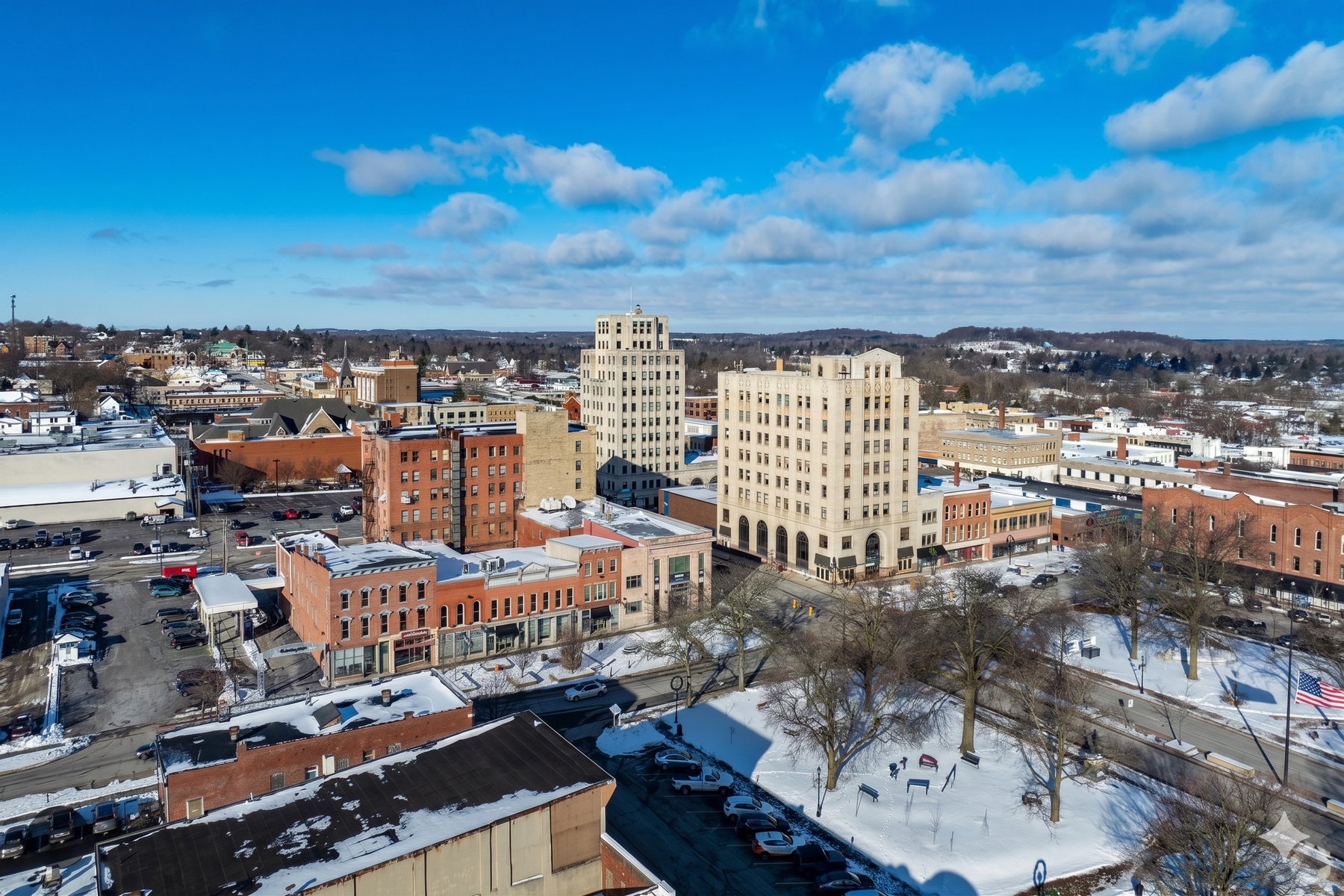
Trust comes first, not last.
An earlier proposal here did not work. It left a lot of people feeling talked at rather than consulted. We want to do the opposite.
- This Community Conversation is an agreement for everyone to see, with nothing behind closed doors.
- No decision before the community and its elected representatives have had a real say.
- If the answer from Mansfield is no, then it is no.
Built on the trade this town already has.
Mansfield has built electrical equipment for over a century, and that trade is exactly what data center builds need. US data centers are forecast to need about 650,000 people across construction and operations by 2026.
What we want to build here is an Innovation and Integration hub: a place where local people train for this work, and where new technology for the data center industry is designed and tested, the kind of work that shapes where the whole industry goes next. We would work alongside NVIDIA, Vertiv, and some of the best researchers from universities across the country and around the world. Our hope is that it opens doors for people in town to build their own ideas, their own businesses, and their own foothold in a fast-growing industry.
- Skilled, local roles, trained and filled here first.
- A campus that builds, tests and ships, so the jobs stay after the construction crews leave.
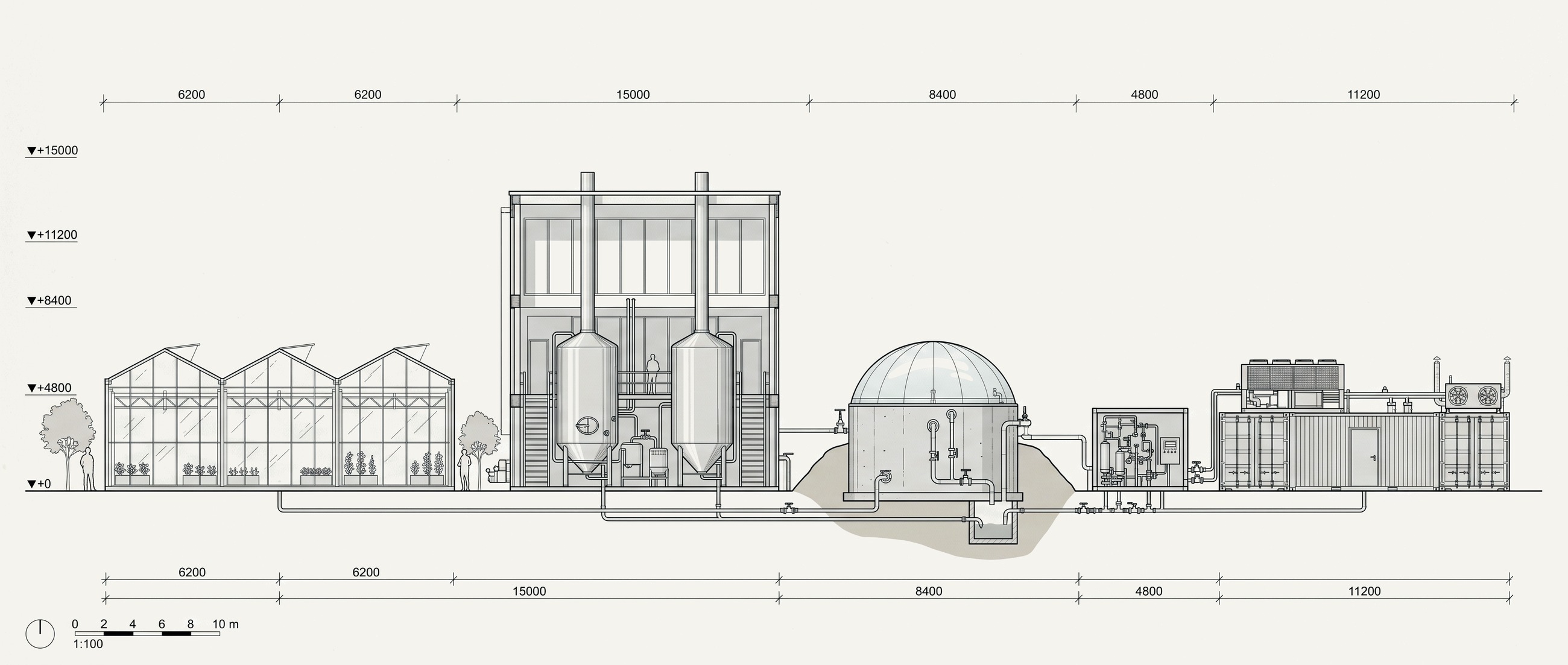
- The benefit to the town sits beside the campus, tied to the heat generated by the site.
The drawing below is the whole thing in two boxes. One holds the computers. The other holds the pumps, pipes, heat exchangers and switchgear that move the warmth away. Most of the work sits in that second box, and that is the part Mansfield already knows how to build.
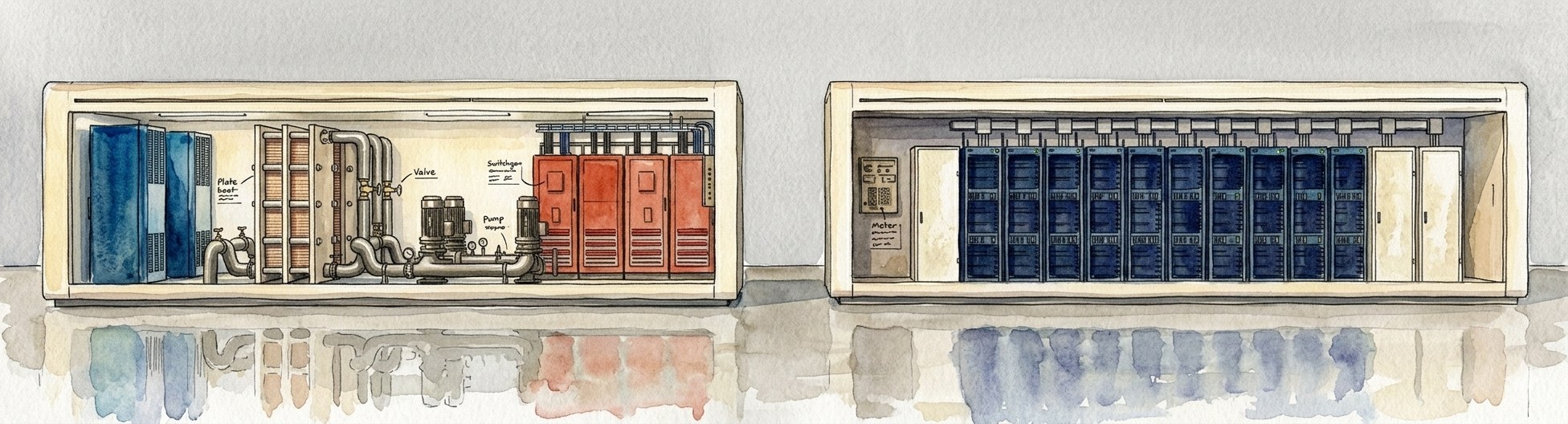
The MicroLink pod, made in Mansfield, delivered to customers around the country.
We say pod because it is the easy word. Each one is really a small power and cooling plant, built in Mansfield and sent out to run for years.
More about heat than anything else.
Most of what MicroLink does comes down to moving heat and putting it to use. There is a good problem to solve here, taking the steady warmth a site like this gives off and turning it into something the town can use, and we would like Ohio's help to solve it well.
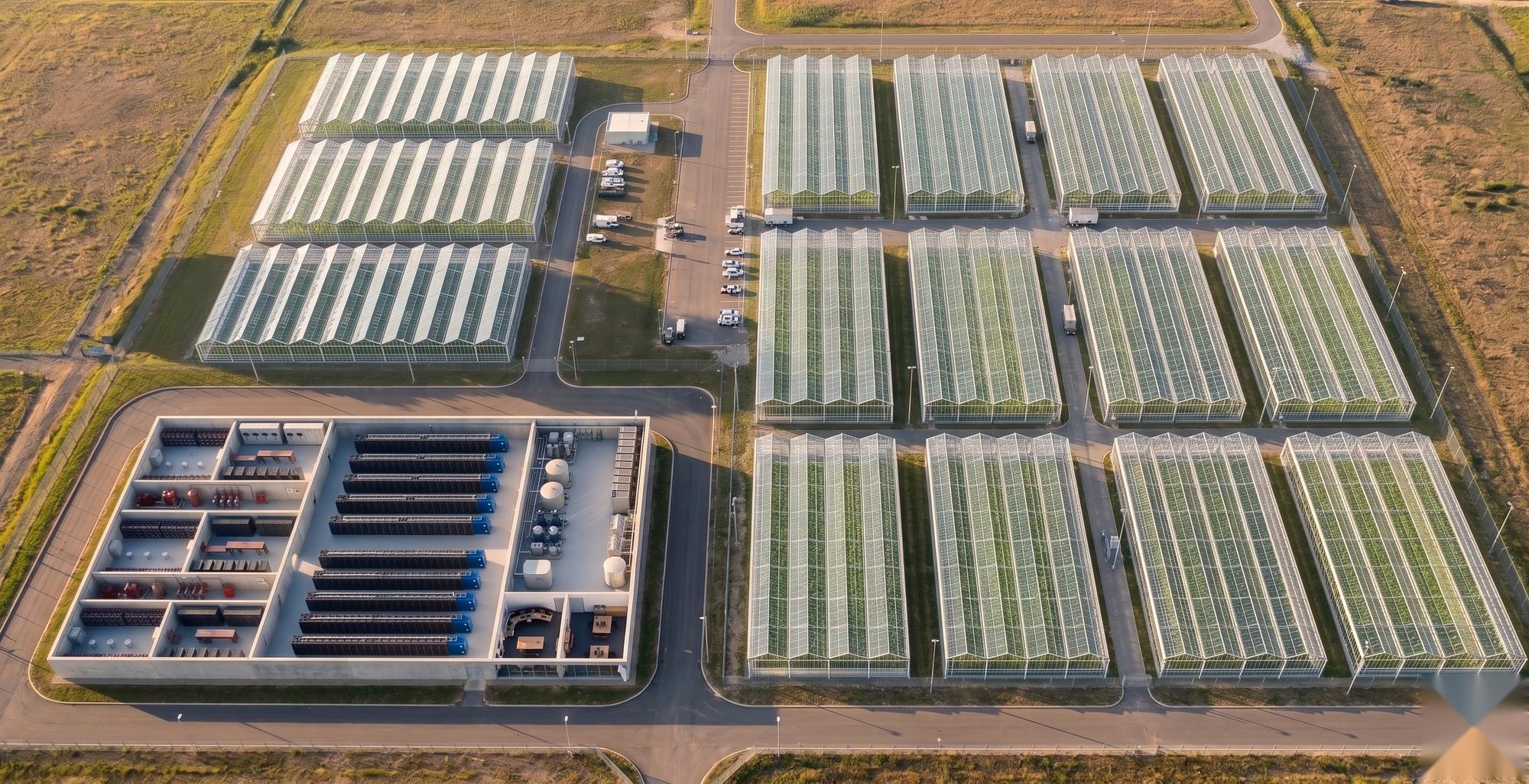
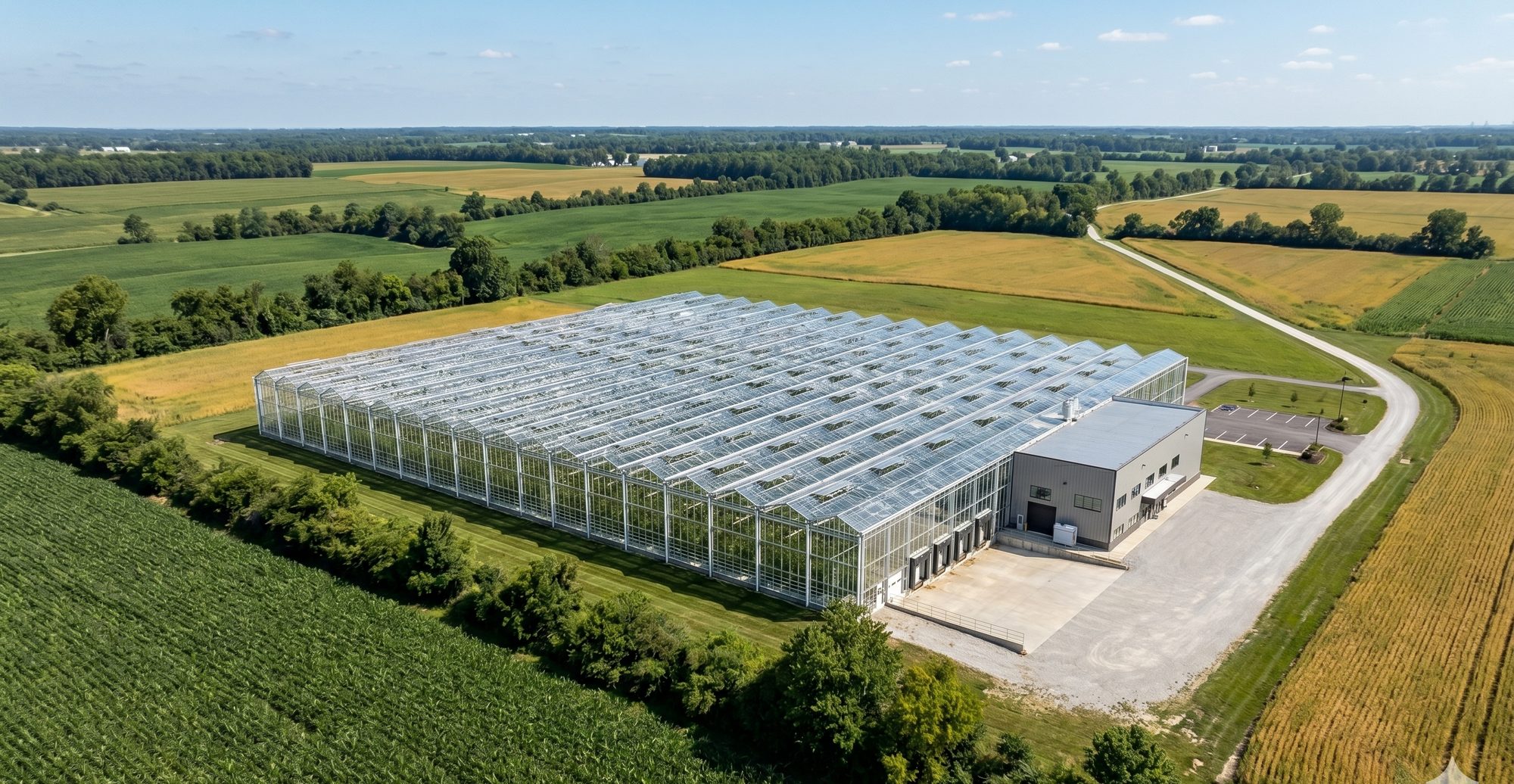
- The known: The heat will power an indoor farm.
- The unknown: The heat could run a brewery, a greenhouse, bioproduction, almost anything that needs heat.
- How we decide: map options and prioritise based on value and feasibility.
- Learning responsibly: Research and development in partnership with universities, coalitions, and other thought partners to learn, pilot, innovate, and lead.
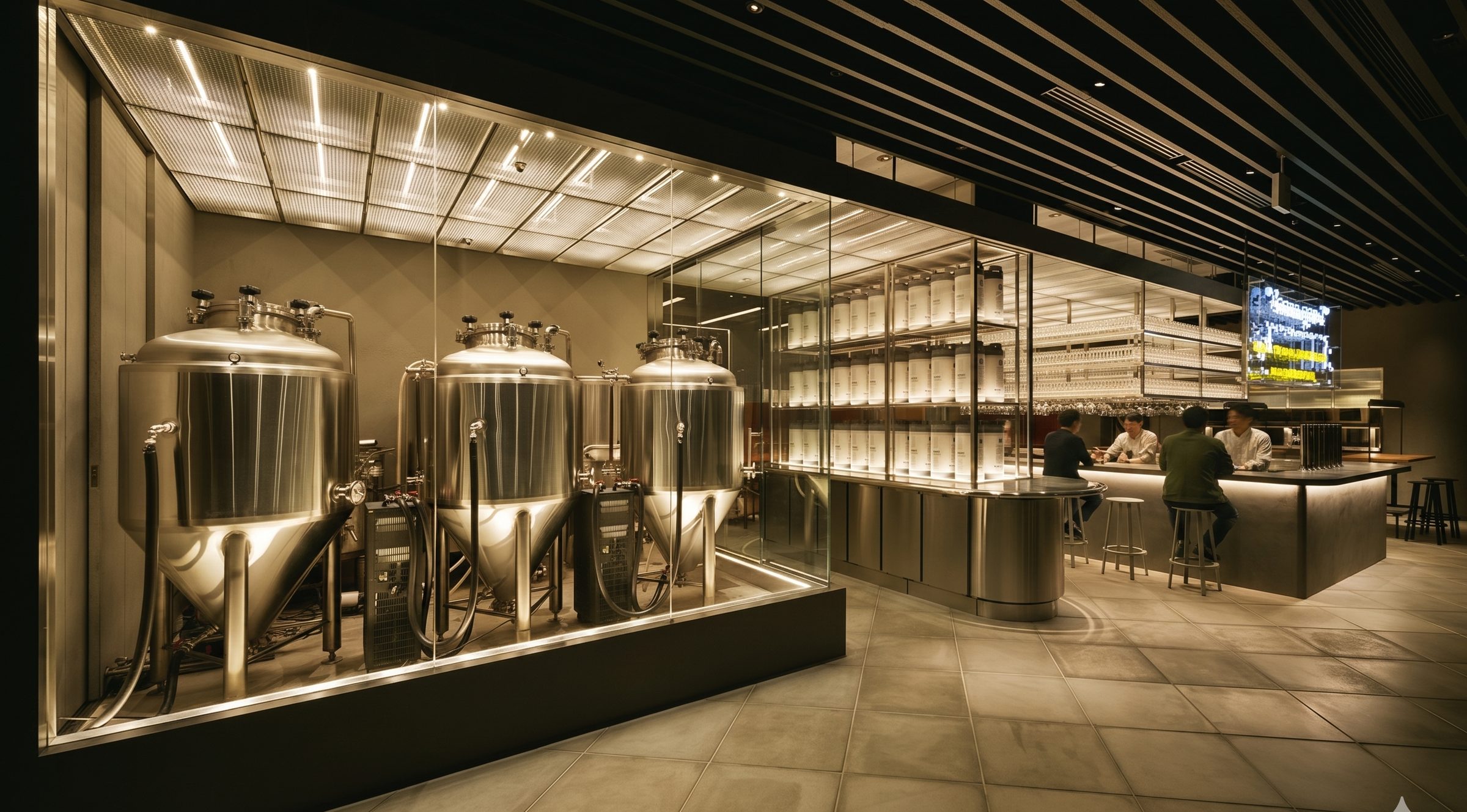
We would not run these things
from far away.
Richland County Foundation
The county’s trusted home for community money since 1945, and the natural keeper of a lasting fund.
North Central State & Pioneer CTC
The colleges that already train local people for skilled work, tied to real jobs here.
NECIC
A North End community organisation already running local food growing, lending, and small-business support.
Nothing moves without the community’s say.
These are not nice words. They are the rules we are asking to be held to.
- Hold Community Conversations with the township, the city, the county, and residents and openly share outcomes.
- No confidentiality on any terms that affect the community.
- A community advisory board, funded so it has real teeth and its own independent advisors.
- Every promise written down, secured, and reported on publicly each year.
- A dedicated feedback channel staffed by a real person to handle concerns or negative impacts on the community.
- Community Conversations continue over the years as community needs evolve.
We are at the very beginning.
There are no approvals, no plans filed, and nothing built. Today is about listening.
Each step only happens if the one before it earns the community’s support.
It would make its own power.
Rather than draw from the public grid and compete for power that homes and local businesses need, the site would generate its own electricity on site, behind the meter.
- Because it makes its own power, it would not raise anyone’s household electricity bill.
- The power would run as cleanly and quietly as the technology allows.
- It would not need new pylons marching across the county to feed it.
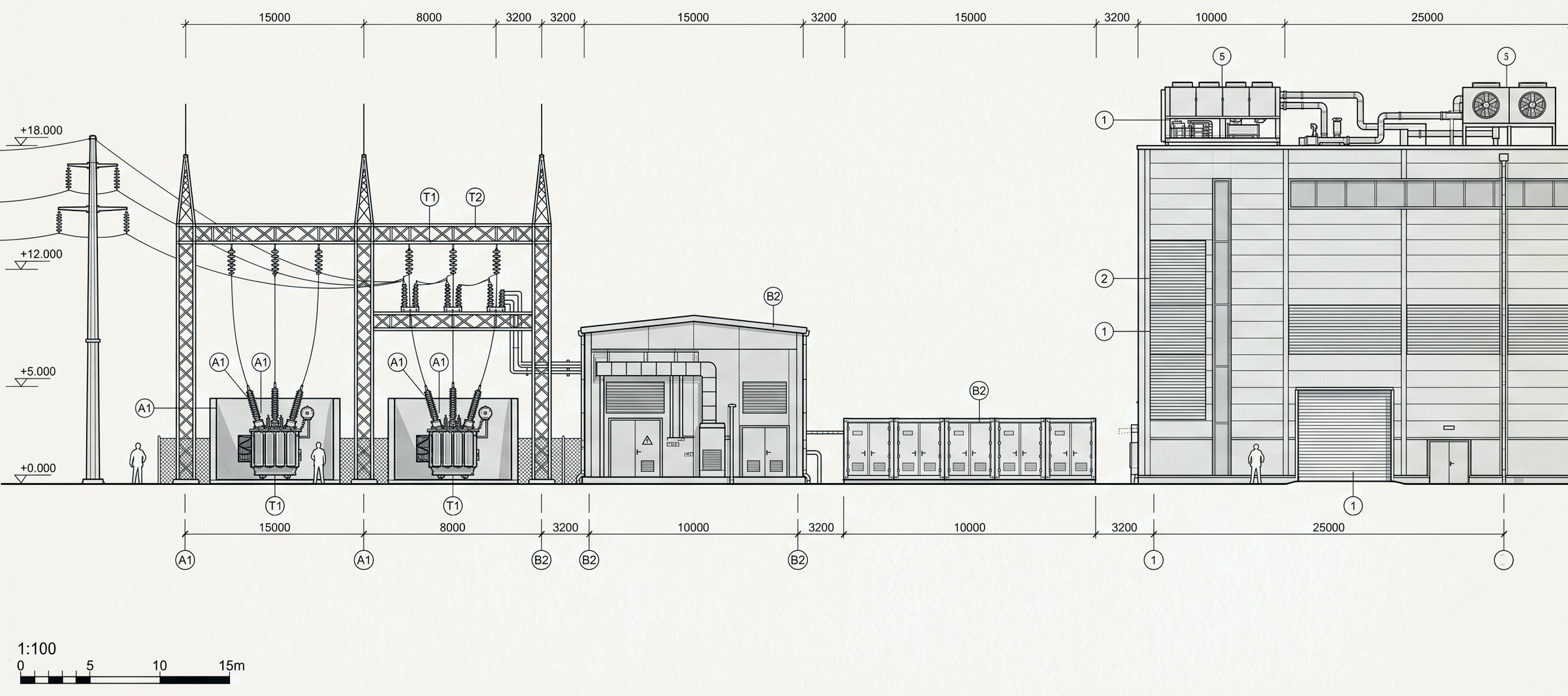
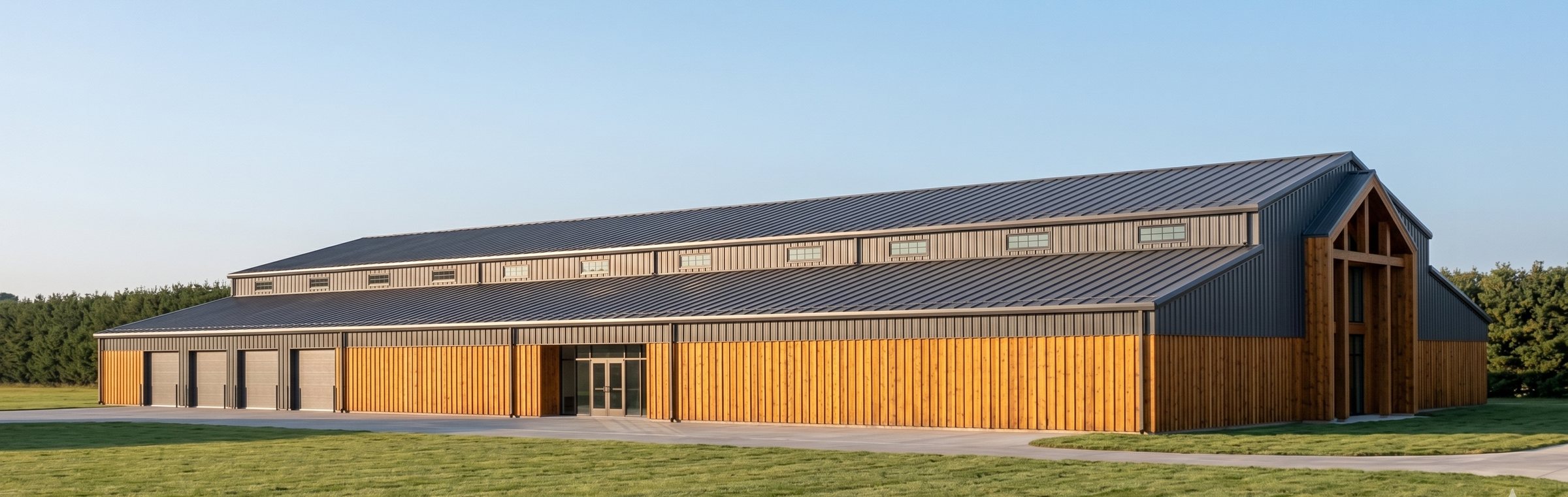
Kept quiet, on purpose.
We treat that as a problem to solve in the design, not a fact to make you live with.
- The generating equipment would sit inside sound attenuating enclosures.
- We would set the limit at the property line so that, at the nearest homes, the project sits within the background sound already there, day and night.
- We would measure it, publish the readings, and be bound to change if they run too high.
Honest about the footprint,
and built to shrink it.
A project like this has a real environmental footprint, and we would rather be straight about it than gloss over it.
- Emissions controlled to the strictest standards and monitored continuously, with the readings made public.
- Because the power is made in one place, we have a single, concentrated point to capture the carbon dioxide before it reaches the air, and we intend to design the site to do that.
- Water kept low and recycled. Light kept low and shielded so the night sky stays dark.
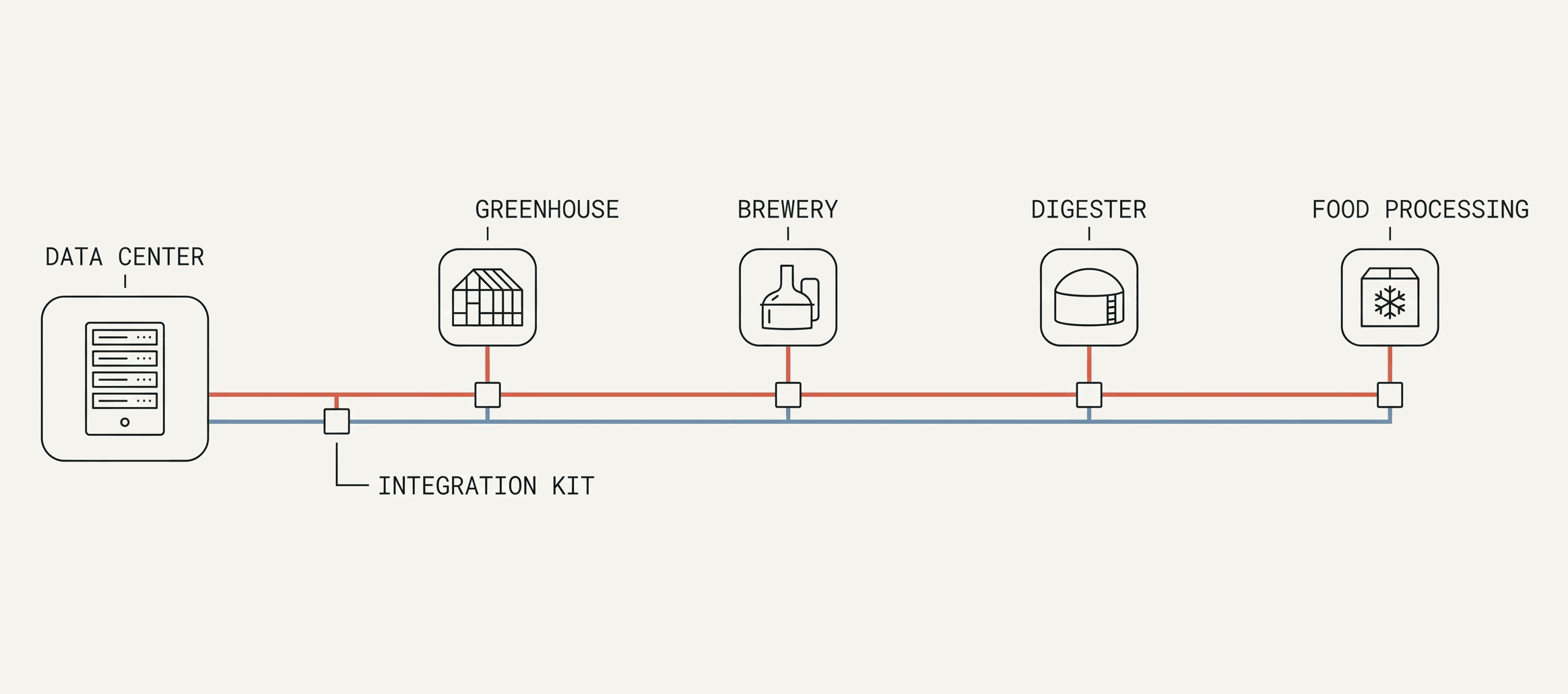
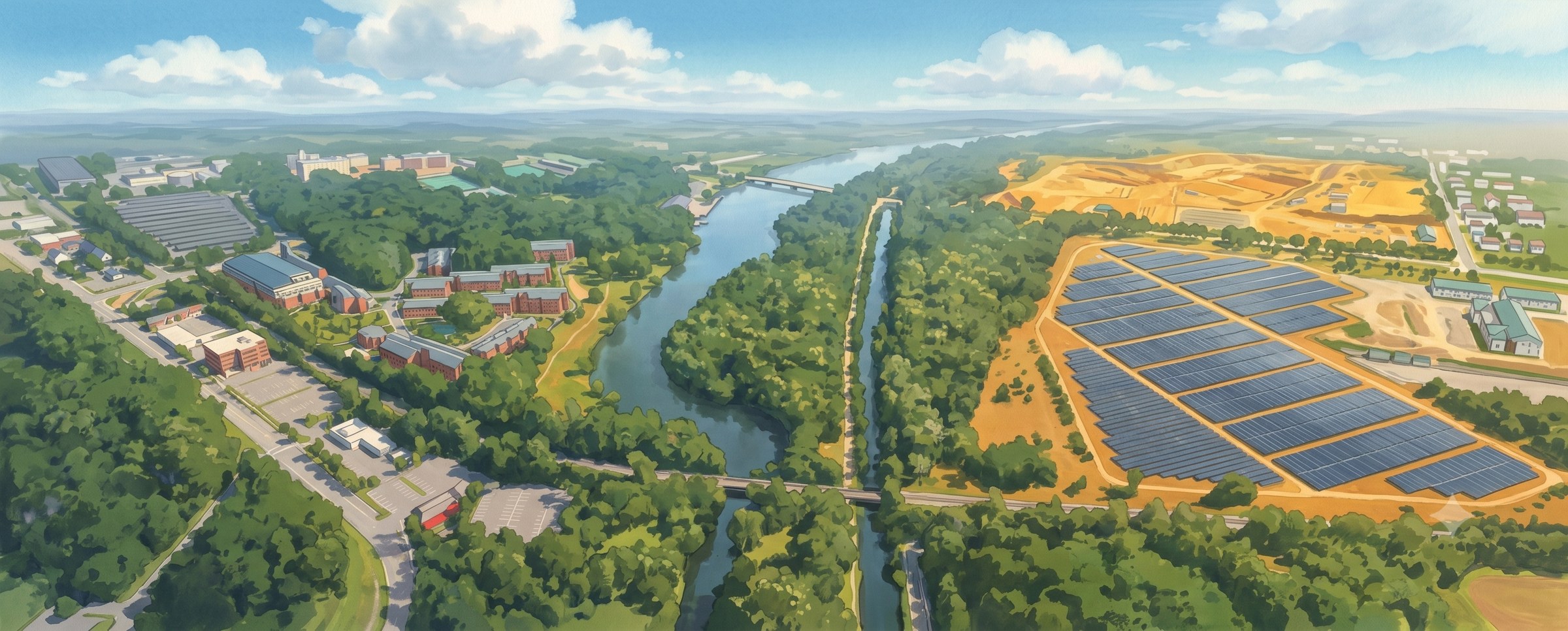
Most of the land stays land.
The buildings would sit on a small part of the site. The rest would stay open, and where we can we would like it to be open to you. Wherever we build we try to leave more protected ground behind than we found, with room for paths, trails and quiet places to walk.
- Built footprint would be a fraction of the acreage, the rest kept as field, woodland and buffer.
- Land we do not build on would be set aside and protected, with walking and running paths through it, open to the township rather than fenced off.
- Tree lines and setbacks between the site and the nearest homes, and existing farming and woodland kept in place where we can.
How big it would be,
shown honestly.
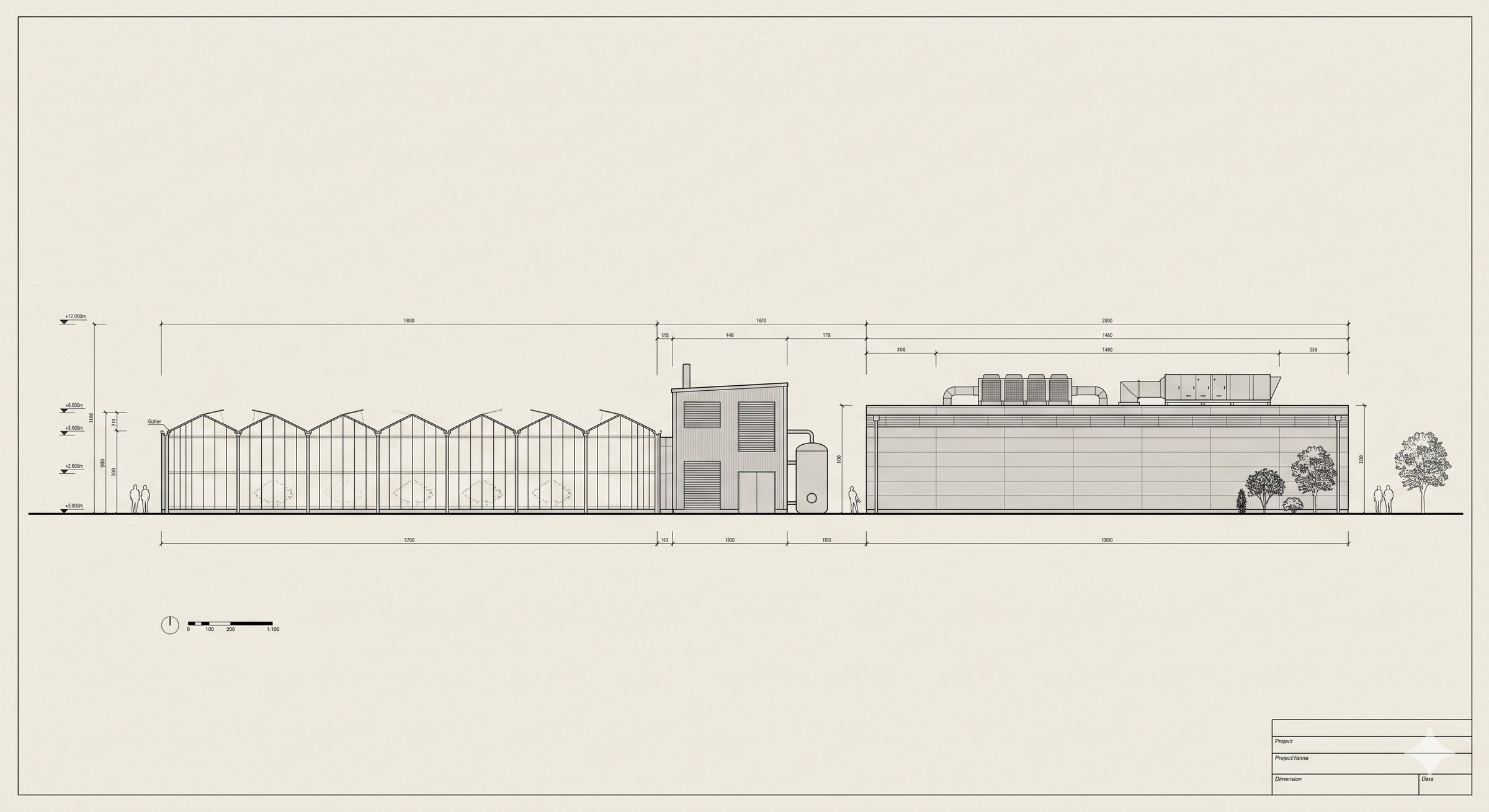
Scale is the thing people are usually asked to take on trust, so we would rather not ask. What gets built gets measured, reported honestly and audited regularly, and published whether the numbers flatter us or not. As the plan takes shape we will show the exact footprint. For now, this is the kind of size we are talking about.
Share a comment or an idea.
Every comment is read, and the things we hear most will shape what comes next. You do not need to support the project to take part. Disagreement is welcome and useful.
Your name (optional)
Your comment, question, or idea
Send it inForm is a placeholder · to be connected before launch
Come to a meeting
Open community sessions where you can ask anything and hear from the people behind the project. Dates to be posted here.
Write to us directly
Prefer to put it in your own words, privately. A contact address will be listed here before launch.
Bring a group
Churches, clubs, schools, and neighbourhood groups can ask us to come and speak with you, on your terms.
Let’s talk.
Come to a meeting and tell us what matters most. Hard questions are welcome.
Sit down with us early, and often, with nothing off the table.
Help us understand the town and shape the benefits so they actually land.
$100 million,
in plain terms.
This is not the offer. This is our idea of what we think could work. We would like to hear from you what is needed and how it could be implemented.
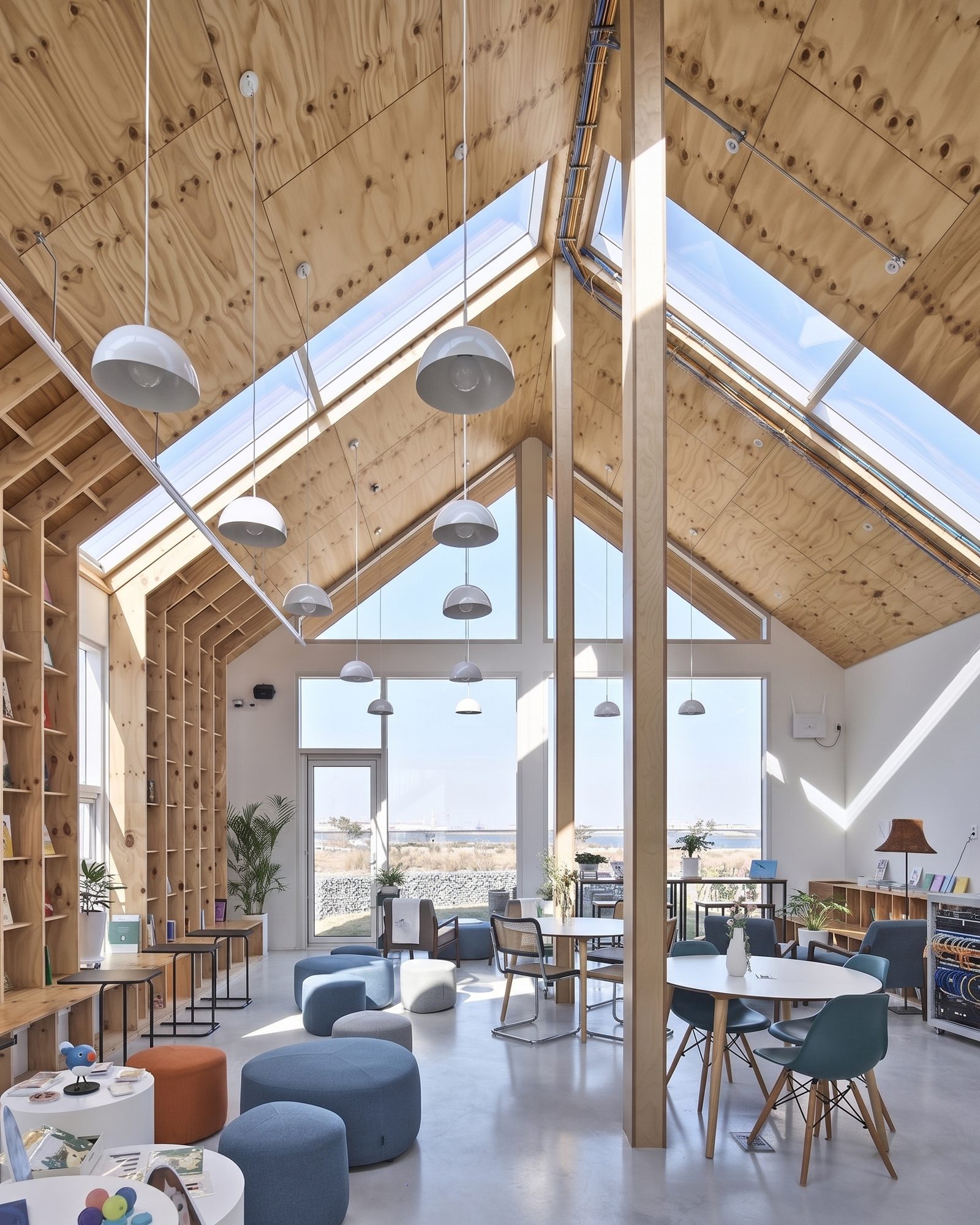
A place to learn the work,
and start your own.
This is the front door to the Silicon Prairie, the part that opens to the town. It is where local people train into the skilled roles the campus needs, and where anyone with an idea can start a business on the free heat the site gives off. The hardest part of starting, the space and the power, is covered.
- Training into real, skilled roles in the work happening on site, taught here and filled here first.
- Space and free heat for local people to start a business, with the costly part of starting covered.
An indoor farm on free warmth.
A year-round indoor farm beside the campus, heated by warmth the site would otherwise waste. Fresh local food grown in town through every season, whatever the Ohio winter is doing outside.
- Warmth supplied free, so the food stays affordable.
- Growing all year, not only through the summer.
Fresh food in local schools.
A school feeding program that puts fresh, healthy food on local children’s plates, supplied in part by the indoor farm next door, and funded to keep running long after the build is done.
- Fresh meals for local schoolchildren, year after year.
- Grown nearby, and funded to last.
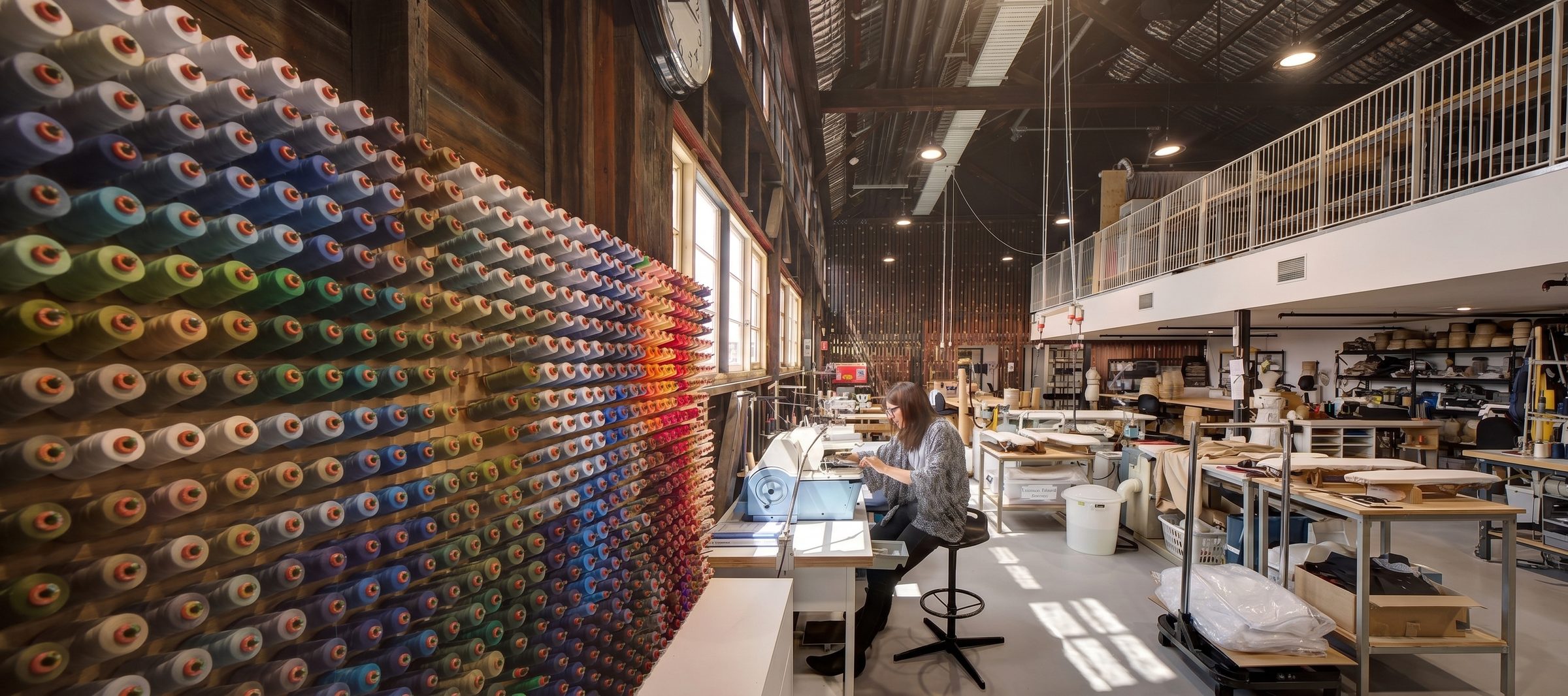
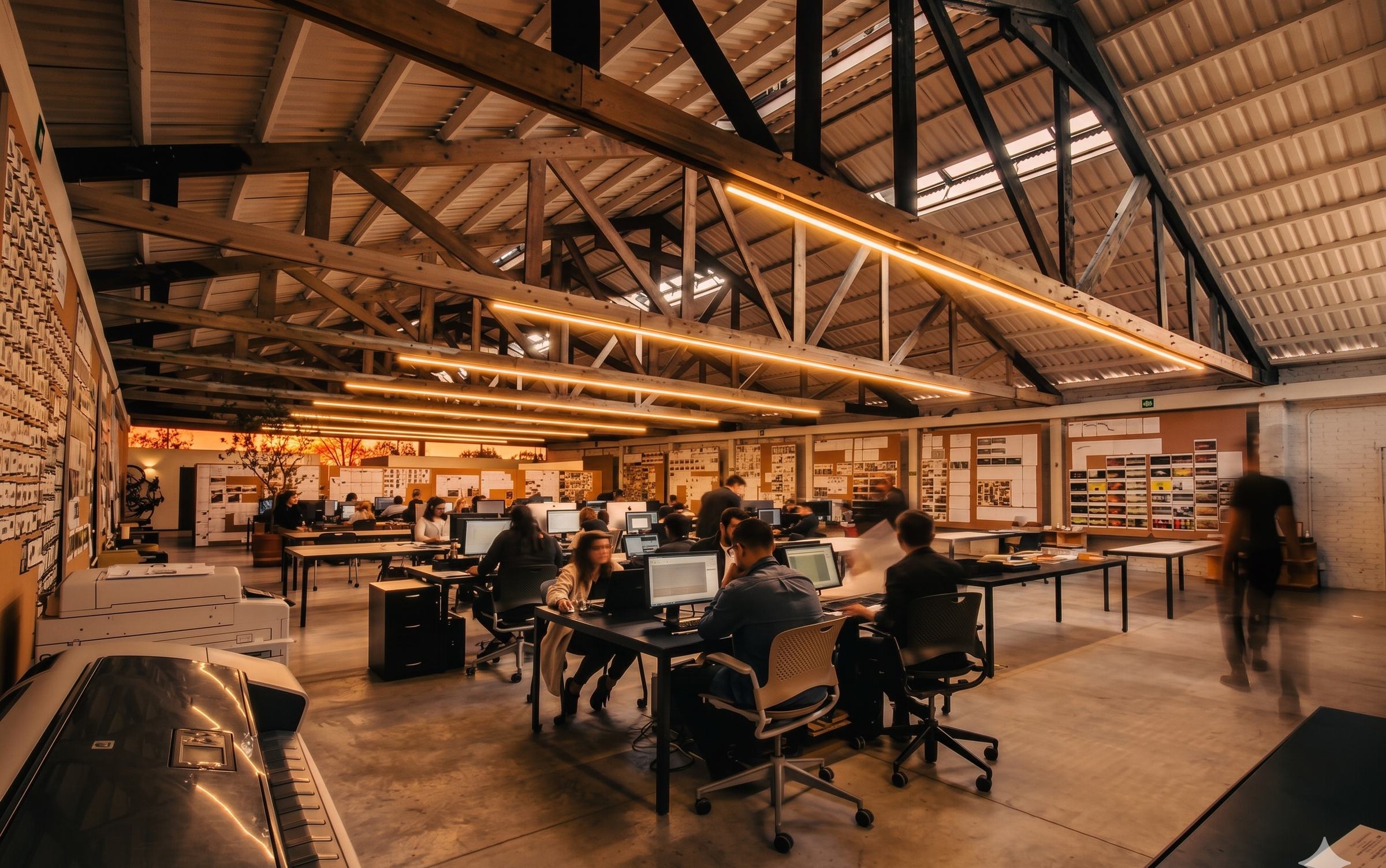
Where the systems get built, and the skills get learned.
This is where MicroLink designs and builds the systems that run the campus, and where local people learn the work that keeps them running. The controls, the monitoring, and the hands-on trade behind a site like this, taught on the floor where it happens.
- Building and testing the MicroLink systems on site, before they ship out.
- Learning the control and monitoring work these systems run on, taught here.